Park to Palette: Turning Long Island Flora into Natural Dyes
Blessing Bafunso
Fall 2025
HIST GU4962: Making and Knowing in Early Modern Europe
In this project and video, I explore New York’s current ecosystem and its capacity for natural dyeing. As someone from New York, I have become increasingly aware of how disconnected we are from the ingredients at our disposal that have the capacity for creation. I hope through this video to not only depict the historical ways humans used to explore their environment and gain knowledge of how to use them as dyes, but also to make natural dyeing seem more accessible and not just something related to other countries for far off places.
I wish to demonstrate that natural dyeing is something we can do in our very own backyards. By reconnecting with the plants and materials around us, we can rediscover traditional practices and develop a deeper appreciation for the natural resources New York has to offer. I hope to bridge the gap between historical knowledge and contemporary practice, making natural dyeing feel like a tangible, achievable craft for anyone else who is interested in exploring their local ecosystem.
My exploration takes place in Eisenhower Park. Originally, I hoped to explore an ecosystem closer to New York City, but due to NYC Park guidelines on research in parks I had to shift locations. Luckily a combination of Eisenhower Park’s proximity to the city and its natural heritage makes this space a very interesting choice to scavenge for natural dyes.
The Hempstead Plains of Long Island (of which Eisenhower Park is now a part) is one of the most remarkable yet overlooked ecosystems in the northeastern United States of America. Historically spanning between 12,500 to 24,282 hectares, these plains were a natural prairie east of the Allegheny Mountains, making them a geographic anomaly.1 When European settlers first arrived, they encountered a treeless landscape that was covered in rank sedge grass which was situated on glacial outwash deposits with a characteristic brownish loam spilling over gravel.2 These plains stretched from what is now the modern-day border of Queens to Plainview, forming a vast open grassland that was simply an hour’s journey by rail from New York City. Originally it was used as an area for pasturing cattle and horses, helping to maintain the landscape’s treeless nature. The area was also prone to fires and the soil had a high level of permeability and moderate moisture retention, preventing woody plants from naturally taking hold.3
The vegetation of the Hempstead Plains was divided into two distinctive habitats: dry upland prairie and wet valley meadow. The upland flora, comprising approximately four tree species, a dozen shrubs and sixty herbs. 4 Dominating in this landscape was little bluestem (Andropogon scoparius) which in some areas made up about three-quarters of the total herbaceous vegetation and was pretty much the only plant between Hicksville and Hempstead. There were other notable prairie grasses such as Indiangrass (Sorghastrum nutans), switchgrass (Panicum virgatum), and big bluestem (Andropogon gerardi).5 There was also a slight presence of wild indigo and bird’s foot violet, which added splashes of color to the largely bleak grasslands. This diverse ecosystem was a very beautiful landscape for centuries but faced dramatic transformations around the mid-nineteenth century.
Around 1869, the development of large, planned communities like Garden
City led to the destruction of much of this vibrant ecosystem. Fast
forward to 1911, naturalist Roland Harper would note that a significant
portion of the natural vegetation had already been lost.6 Since then,
the decline has been less catastrophic, but only about 100 acres of the
original 60,000 acres remains. The surviving fragments are scattered
throughout modern day Nassau County, and are extremely vulnerable to
development, trash dumping, and exotic species invasions.7 The most
prominent portion of these remnants is, of course, Eisenhower Park.
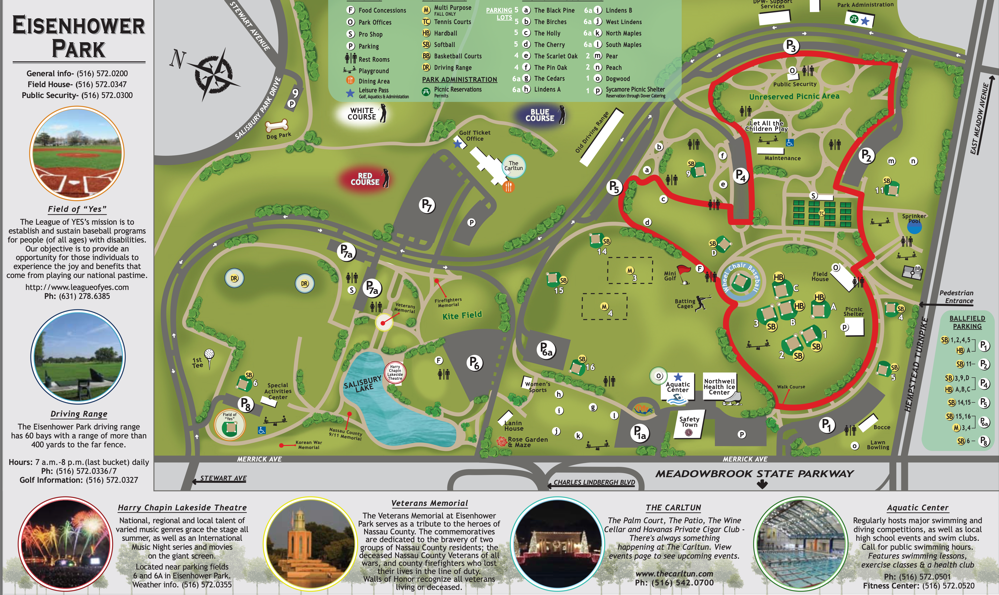
Modern preservationists note that the Red Golf Course in Eisenhower Park has experienced the least amount of soil disturbance among the remnants. From image analysis, we can confirm the presence of native warm season grasses in the course, with an 89% accuracy in distinguishing these native species from non-native varieties. And because of this analysis, the native Indiangrass seeds have been successfully harvested for restoration products by the Francis Purcell Preserve.8
Beyond their historical significance, many of the plants in the Hempstead Plains remnants hold potential to be sources of natural dyes. Wild indigo belongs to the Fabaceae family, which includes plants which were historically vital to blue dye production. And, goldenrod, another plant from the Plains, produces bright yellow tones. Wild carrot, otherwise known as Queen Anne’s lace, can yield a very strong orangish-brown color due to its high oxalic acid content (the oxalic acid acts as a sort of natural mordant).9 Although wild carrot and many of the other flora in Eisenhower Park have been introduced to the ecosystem, they offer various possibilities in natural dyeing. Through my efforts, I hope I can transform the park from just an area in the community but also a possible base for exploring the art of natural dyeing.
The video highlights my exploration of Eisenhower Park gathering ingredients I hypothesize will be useful for natural dyeing. With the usage of online flora databases like iNaturalist and PlantNet, I identified the plants I encountered and gained information on their dyeing possibilities. I then experimented with dyes and mordants. I hope you enjoy my efforts!
Bibliography
Burgess, Rebecca, and Paige Green. Harvesting Color: How to Find Plants and Make Natural Dyes. New York: Artisan, 2011.
Gilbert (nee Stoker), Kerry G., and David T. Cooke. “Dyes from Plants: Past Usage, Present Understanding and Potential.” Plant Growth Regulation 34, no. 1 (2001): 57–69. https://doi.org/10.1023/a:101337461887.
Harper, Roland M. “The Hempstead Plains of Long Island.” Torreya 12, no. 12 (1912): 277–87. https://doi.org/10.2307/40595253.
Harper, Roland M. “The Vegetation of the Hempstead Plains.” Memoirs of the Torrey Botanical Club 17, no. 1 (1918): 262–86. https://doi.org/10.2307/43392199.
iNaturalist Users. “Eisenhower Park (Nassau County) Check List.” iNaturalist, 2021. https://www.inaturalist.org/check_lists/1667806-Eisenhower-Park–Nassau-County–Check-List?iconic_taxon=47126.
Long Island Parks. “Eisenhower Park Map - East Meadow.” 2012. https://liparks.com/wp-content/uploads/2024/09/EISENHOWER-PARK-East-Meadow.png.

Neidich-Ryder, Carole, and Patrick Kennelly. “Mapping Prairie Remnants on the Hempstead Plains, Long Island, New York.” Environmental Monitoring and Assessment 186, no. 5 (January 11, 2014): 3011–22. https://doi.org/10.1007/s10661-013-3597-1.
New York Natural Heritage Program, and Aissa Feldmann. “Hempstead Plains Grassland Guide - New York Natural Heritage Program.” guides.nynhp.org, 2023. https://guides.nynhp.org/hempstead-plains-grassland.
Pelkowski, Patricia. “The Pine Barrens: It Ain’t Just Pines.” Pinebarrens.org. Long Island Pine Barrens Society, July 17, 2019. https://www.pinebarrens.org/bridge-to-the-barrens/the-pine-barrens-it-aint-just-pines/.
Stalter, Richard, and Wayne Seyfert. “The Vegetation History of Hempstead Plains, New York.” DigitalCommons@University of Nebraska - Lincoln, August 11, 1988. https://digitalcommons.unl.edu/napcproceedings/56/.
-
Roland M Harper, “The Hempstead Plains of Long Island,” Torreya 12, no. 12 (1912): 277–87, https://doi.org/10.2307/40595253. ↩︎
-
Roland M Harper, “The Vegetation of the Hempstead Plains,” Memoirs of the Torrey Botanical Club 17, no. 1 (1918): 262–86, https://doi.org/10.2307/43392199. ↩︎
-
Richard Stalter and Wayne Seyfert, “The Vegetation History of Hempstead Plains, New York,” DigitalCommons@University of Nebraska - Lincoln, August 11, 1988, https://digitalcommons.unl.edu/napcproceedings/56/. ↩︎
-
Harper, “The Hempstead Plains of Long Island.” ↩︎
-
Stalter and Seyfert, “The Vegetation History of Hempstead Plains, New York.” ↩︎
-
Harper, “The Hempstead Plains of Long Island.” ↩︎
-
Patricia Pelkowski, “The Pine Barrens: It Ain’t Just Pines,” Pinebarrens.org (Long Island Pine Barrens Society, July 17, 2019), https://www.pinebarrens.org/bridge-to-the-barrens/the-pine-barrens-it-aint-just-pines/. ↩︎
-
Carole Neidich-Ryder and Patrick Kennelly, “Mapping Prairie Remnants on the Hempstead Plains, Long Island, New York,” Environmental Monitoring and Assessment 186, no. 5 (January 11, 2014): 3011–22, https://doi.org/10.1007/s10661-013-3597-1. ↩︎
-
New York Natural Heritage Program and Aissa Feldmann, “Hempstead Plains Grassland Guide - New York Natural Heritage Program,” guides.nynhp.org, 2023, https://guides.nynhp.org/hempstead-plains-grassland/; and Kerry G. Gilbert (nee Stoker) and David T. Cooke, “Dyes from Plants: Past Usage, Present Understanding and Potential,” Plant Growth Regulation 34, no. 1 (2001): 57–69, https://doi.org/10.1023/a:1013374618870. ↩︎